Digital self-service should make insurance easier, not make customers fight harder to reach a person. The strongest service models know when to automate and when to hand off.
The best digital service does not trap customers in digital channels
Insurance self-service works best when it helps policyholders complete routine tasks quickly and hands off to a person when the situation calls for judgment, empathy, urgency, or regulatory care. The problem is that many digital programs treat escalation as a failure. In reality, escalation can be a sign of a mature service model if it happens at the right time and with the right context.
Policyholders do not judge digital service by whether an insurer kept them in a chatbot or portal. They judge it by whether the insurer helped them solve the problem. Downloading an ID card, checking a payment, uploading documents, or viewing basic claim status may be handled digitally. A coverage dispute, severe claim, confusing denial, fraud concern, or emotional loss may need a human quickly.
When self-service should handle the journey
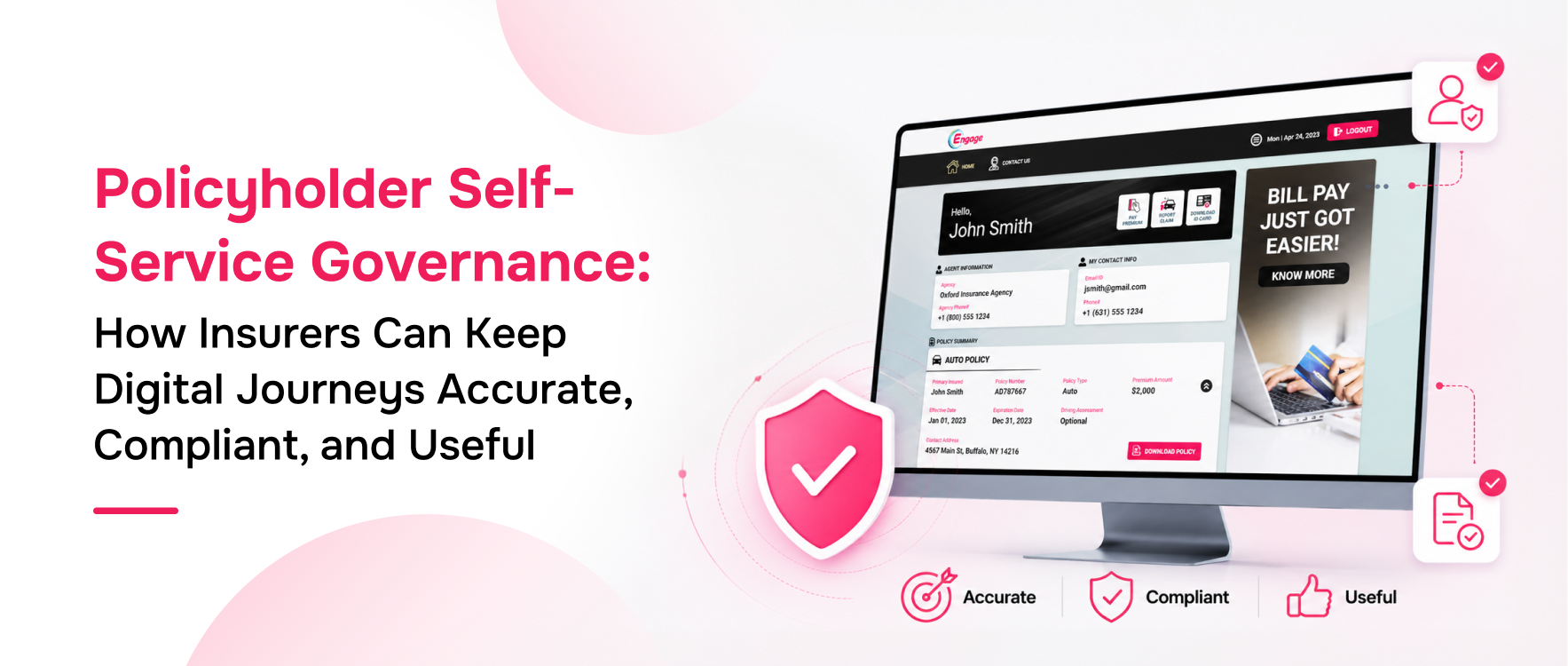
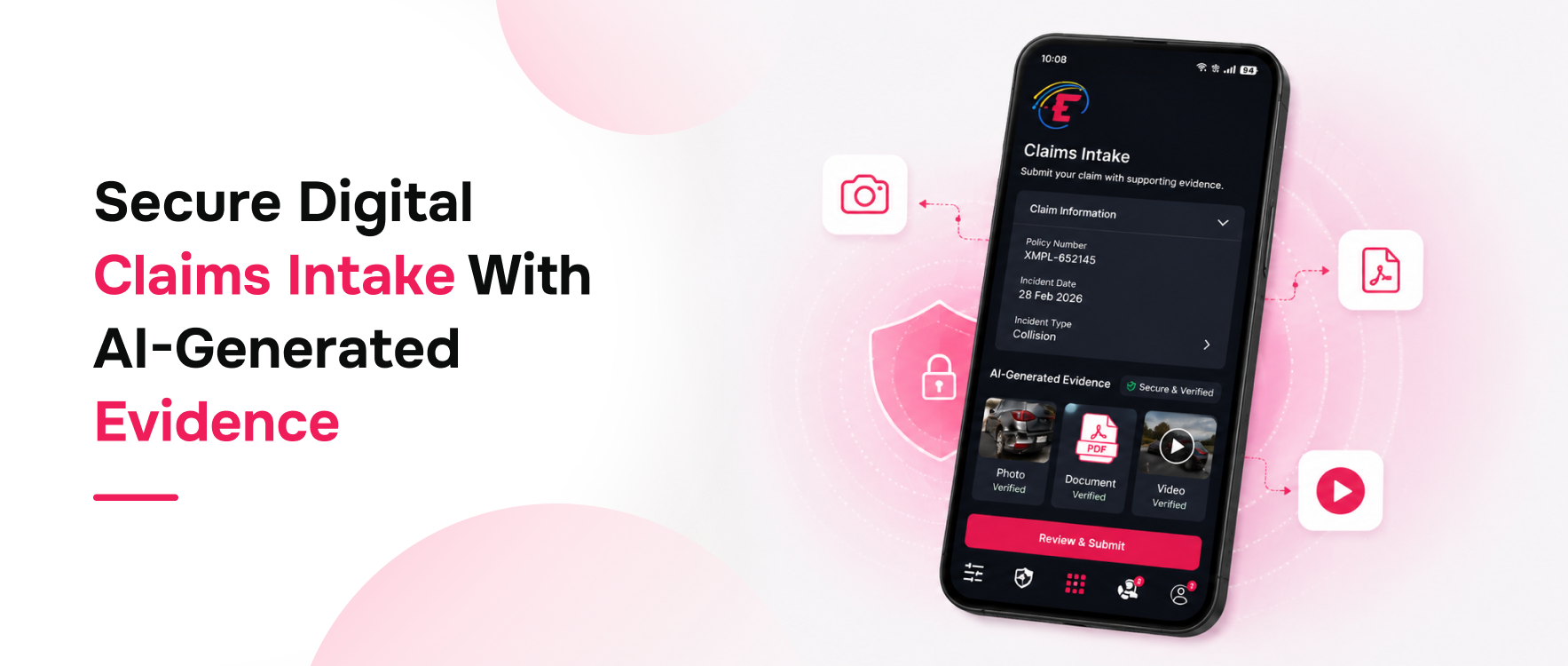
Self-service is strongest for repeatable, low-risk, high-frequency actions. These include accessing policy documents, downloading ID cards, making payments, checking simple claim status, updating basic contact information, reviewing renewal documents, receiving reminders, and submitting standard forms or photos.
For these tasks, policyholders usually value speed and clarity more than conversation. They want the insurer to remove friction. A well-designed self-service journey should authenticate the user, present relevant options, explain the next step, confirm completion, and provide a clear support path if something is wrong.
When the journey should hand off to a human
Human escalation should be easy when the issue is complex, urgent, emotional, ambiguous, or sensitive. Examples include severe loss events, injury-related claims, complaints, suspected fraud, policy cancellation confusion, payment disputes, coverage questions, and situations where the customer repeatedly fails to complete a workflow.
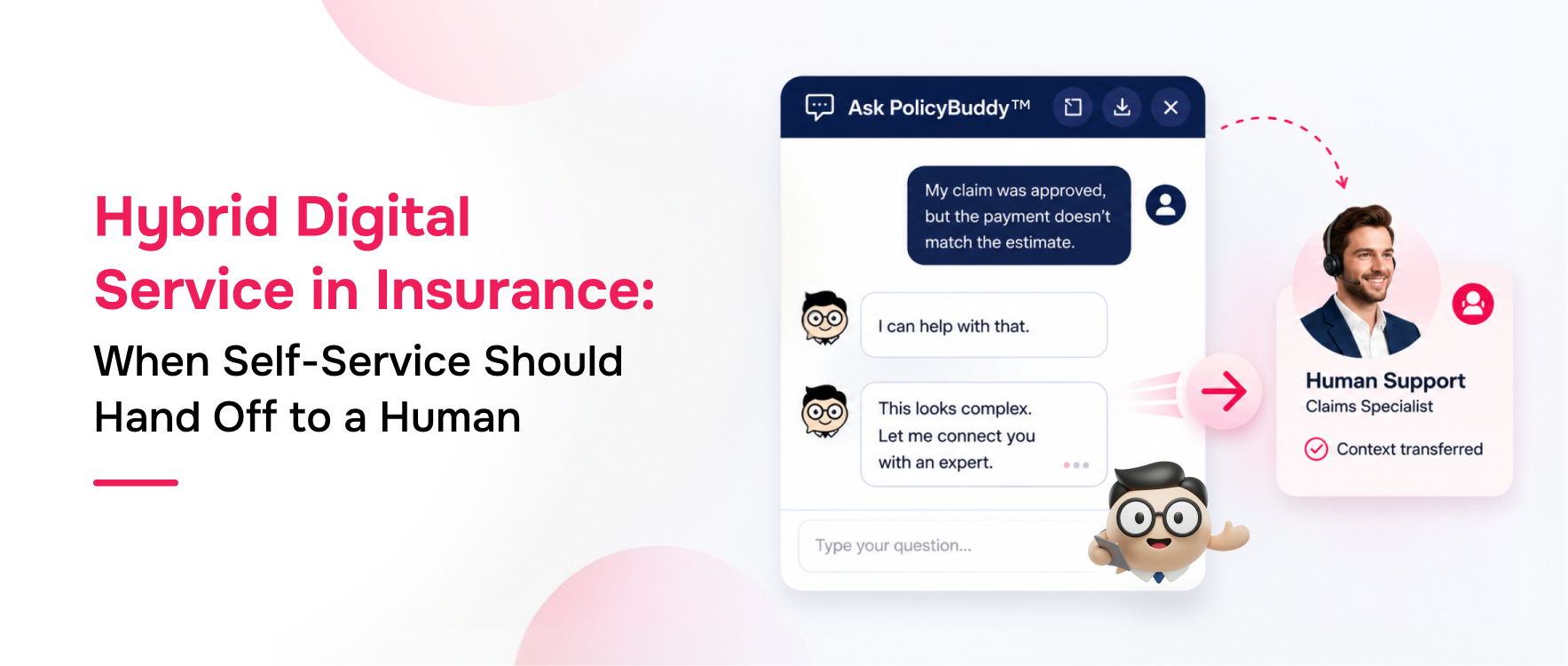
Escalation should also be triggered when the digital experience shows signs of frustration. Repeated searches, multiple failed form attempts, repeated chatbot rephrasing, rapid page switching, or repeated visits to the same status page may indicate that the customer needs help. The best hybrid model uses digital signals to improve service, not to block access to support.
The handoff should preserve context
A poor handoff forces the policyholder to start over. A strong handoff gives the representative or adjuster useful context: who the customer is, what task they attempted, which documents they uploaded, what questions they asked, which claim or policy they referenced, and where the journey failed.
This context reduces frustration for the customer and improves efficiency for the service team. It also makes digital channels more valuable internally. The portal, app, chatbot, and notification layer are no longer isolated tools. They become part of a connected service record that helps humans support customers better.
Where Xemplar Engage comes into play
Xemplar Engage can be positioned as a practical engagement layer for hybrid insurance service. Its branded mobile app, insured portal, PolicyBuddy chatbot, notifications, and admin visibility can help insurers design self-service journeys that support routine tasks while keeping escalation paths visible and manageable.
This is different from writing another generic article about chatbots in insurance. The stronger point is that Xemplar Engage helps insurers and MGAs coordinate digital service moments so customers can self-serve when appropriate and receive help when digital is not enough.
How insurers should govern escalation rules
Escalation rules should be owned jointly by digital, operations, claims, service, compliance, and product teams. A chatbot team alone should not define when a claim complaint moves to a human. A portal team alone should not decide how billing disputes are handled. Hybrid service governance should define which workflows are self-service, which require review, which require immediate handoff, and which require documentation before handoff.
Insurers should also review escalation data regularly. If many policyholders escalate from the same self-service page, the page may be unclear. If a chatbot escalates too often on routine topics, content or workflow design may need improvement. If escalation rarely happens but complaints rise, customers may be trapped in digital channels.
Design principles for better digital-to-human service
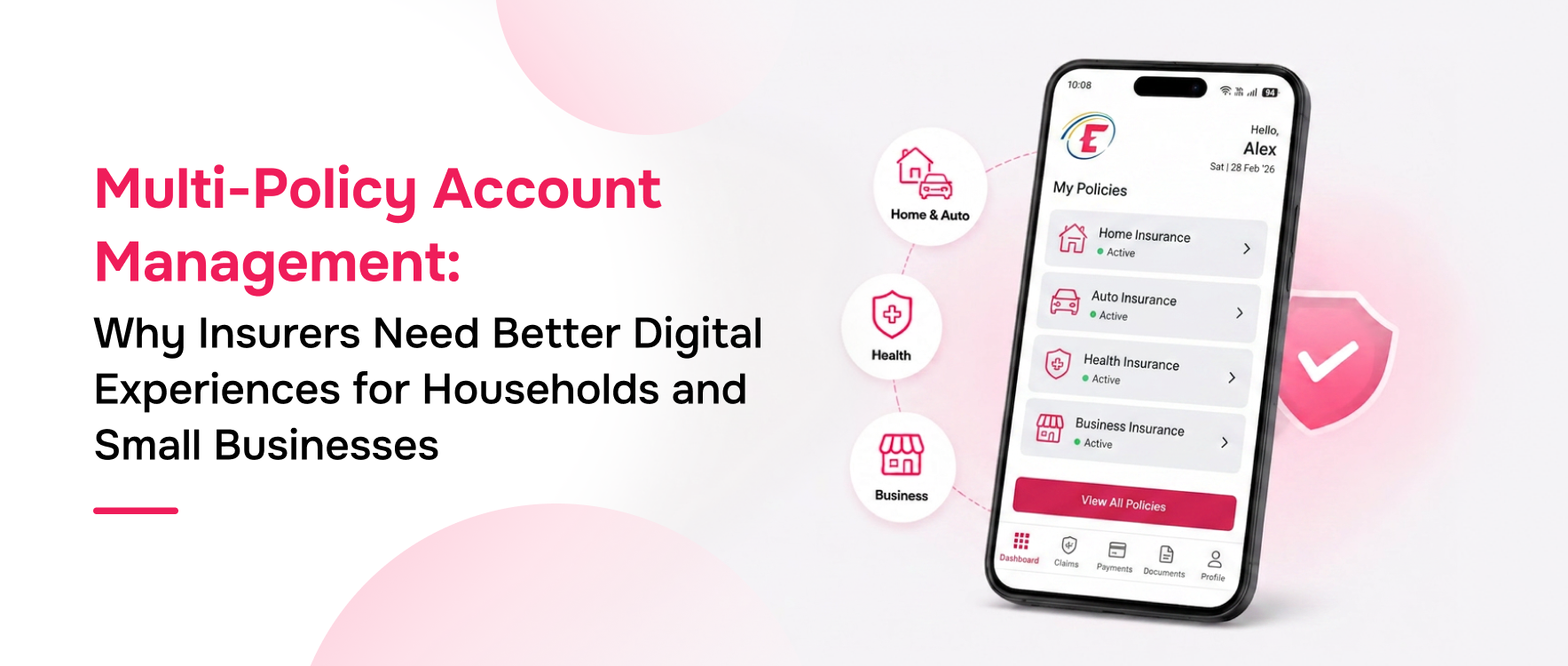
A strong hybrid service model starts by mapping the purpose of each channel. The portal may be best for authenticated account access. The mobile app may be best for quick actions, notifications, and document access. A chatbot may be useful for routing, simple answers, and guidance. A human representative is best for judgment, empathy, sensitive issues, exceptions, and complex policy or claim questions.
Once the role of each channel is clear, insurers can define handoff triggers. These triggers should include workflow type, customer behavior, risk level, regulatory sensitivity, and emotional context. A repeated failed attempt should trigger help. A severe loss should provide immediate human access. A routine ID card download should not require a phone call unless something is wrong.
This design helps insurers avoid two common failures: over-automating sensitive journeys and under-automating routine ones. The result is a service model that feels efficient without feeling impersonal.
Implementation checklist for hybrid service design
Insurers can start by classifying service journeys into three groups: self-service first, assisted service, and human-first. Self-service first journeys include routine tasks such as ID card access and document downloads. Assisted journeys may begin digitally but require review, such as claim documentation or billing exceptions. Human-first journeys include severe losses, complaints, disputes, and sensitive policy questions.
Each group should have a defined handoff rule. A customer should not have to discover escalation through trial and error. The app, portal, chatbot, or notification should make the next best step clear.
Teams should also monitor whether handoffs are happening too early, too late, or without enough context. The best hybrid service model evolves as customer behavior and service data reveal where policyholders need more help.
How hybrid service improves both CX and operations
Hybrid service is an operating model as much as a customer experience idea. Routine tasks move through lower-cost digital journeys, while high-judgment interactions reach the right people faster. This helps insurers protect human capacity for the moments where it matters most. It also gives leaders better data about where customers struggle, which workflows need redesign, and which topics should be moved into clearer self-service paths. Xemplar Engage should be positioned around this connected service orchestration rather than a single channel replacement.
FAQs
- What is hybrid digital service in insurance?
Hybrid digital service combines digital self-service for routine insurance tasks with easy human support for complex, sensitive, urgent, or regulated issues. - When should insurance self-service escalate to a human?
Escalation should happen for severe claims, disputes, complaints, coverage confusion, suspected fraud, repeated failed attempts, and situations requiring judgment or empathy. - Why does context matter in digital-to-human handoff?
Context prevents customers from repeating information and helps service representatives understand what the customer already tried. - How does Xemplar Engage support hybrid service?
Xemplar Engage supports connected mobile, portal, chatbot, notification, and admin experiences that can help insurers coordinate digital journeys and service handoffs.