AI-generated evidence is changing how insurers think about digital claims intake. The response should not be more friction for every honest customer, but better structure, review context, and governance.
AI-generated evidence changes the claims intake conversation
Digital claims intake has made it easier for policyholders to submit information, photos, videos, and documents from anywhere. That convenience is valuable, but the rise of AI-generated images and documents is changing the risk conversation. Insurers now have to think carefully about how evidence is collected, preserved, reviewed, and escalated.
Recent coverage of insurers confronting AI-assisted bogus claims shows why this topic is timely. The point is not that every digital claim is suspicious. Most policyholders are trying to report legitimate losses and want the process to be easier. The challenge is designing intake workflows that support convenience for honest customers while giving claims teams the context and structure they need for review.
Secure intake starts with structure, not suspicion
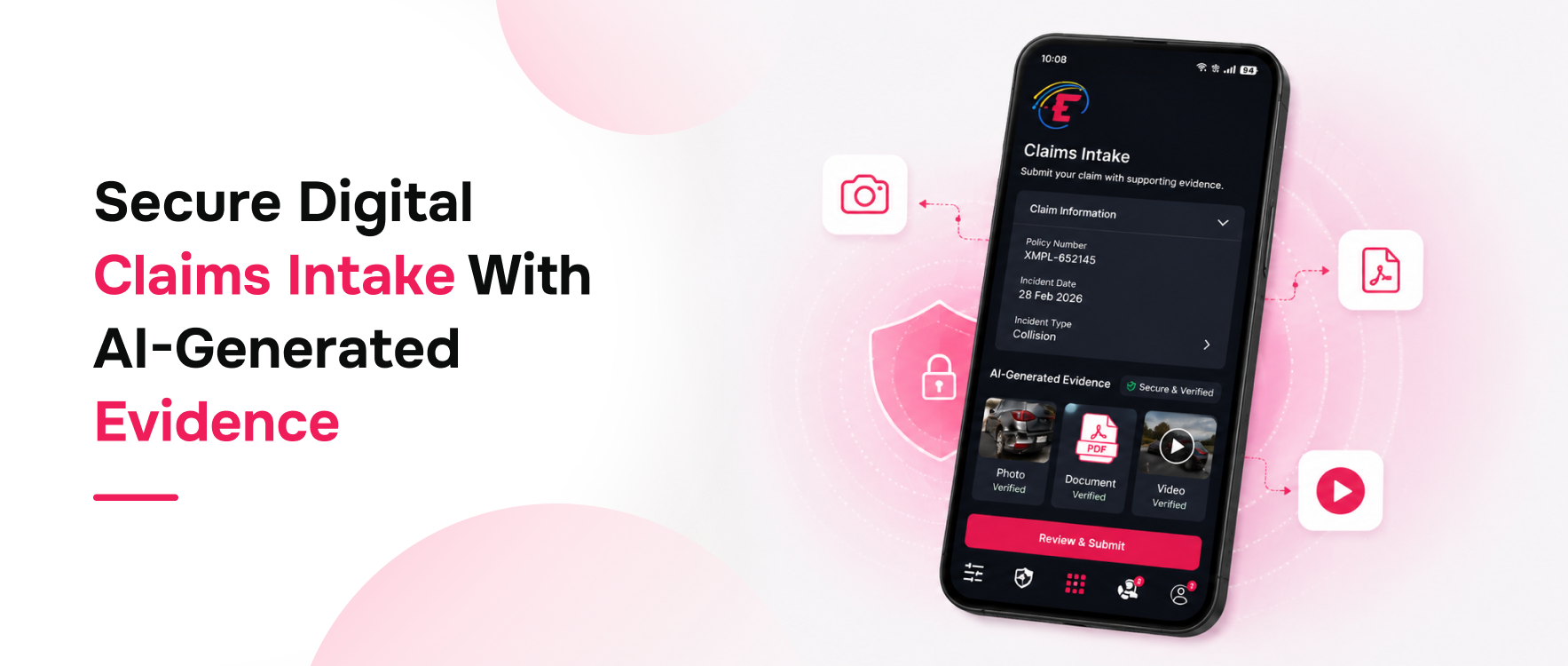
A secure digital claims intake workflow should not make the experience hostile. It should collect information in a structured way. That includes policyholder identity, policy or claim details, loss type, date and location, guided descriptions, required documents, uploaded files, submission timestamps, and clear next steps.
Structure helps claims teams because it reduces ambiguity. Instead of receiving a loose set of files, the insurer receives information connected to a specific claim journey. This makes review easier and supports auditability. It also helps policyholders because the workflow explains what is needed and confirms when information has been received.
What insurers should collect during digital intake
Insurers should design digital intake around review context. For many claim types, this may include guided loss questions, photo or video instructions, document categories, file metadata where available, policyholder acknowledgments, contact preferences, and consent language. The workflow should also distinguish between required and optional information so customers do not abandon the process because they are unsure what matters.
Where risk is higher, claims teams may need review queues, escalation rules, audit trails, and human oversight. The article should be careful not to claim that any engagement tool can detect AI-generated evidence unless that capability is verified. A safer and more accurate position is that structured intake improves review context and supports better operational control.
The role of audit trails and review context
Audit trails matter because claim evidence is more than content. It is part of a process. Insurers need to know when information was submitted, through which channel, by whom, and in connection with which claim. They may also need to know whether additional documentation was requested, whether the policyholder revised the submission, and when the file moved to review.
This does not eliminate fraud risk. It improves process integrity. In a world where generated evidence is easier to create, intake workflows should help claims teams separate missing information, customer confusion, suspicious patterns, and ordinary documentation errors.
Where Xemplar Engage comes into play
Xemplar Engage can fit this topic as a policyholder engagement and workflow layer that supports more structured digital interactions. The right positioning is not fraud detection. The right positioning is secure, organized, policyholder-friendly intake and communication across mobile, portal, chatbot, notifications, and admin-facing visibility.
For insurers and MGAs, this matters because digital claims intake should be both easy to use and operationally controlled. Xemplar Engage can be introduced as part of the digital service environment that helps collect information, guide customers, send updates, and support internal oversight.
How to balance convenience and control
The strongest claims intake programs do not make every customer feel like a suspect. They use plain-language instructions, mobile-friendly upload, confirmation messages, escalation paths, and review workflows. They also define how unusual submissions, missing information, repeated uploads, or sensitive claim types should be handled.
This balance is important for brand trust. If intake is too loose, claims teams receive poor information and risk rises. If intake is too restrictive, honest policyholders become frustrated. Secure digital claims intake should improve both customer ease and claim review discipline.
Practical safeguards insurers can add without adding unnecessary friction
Insurers can strengthen digital claims intake without making every policyholder feel investigated. Practical safeguards include clear identity verification, guided loss questions, required documentation by claim type, upload confirmations, file labels, submission timestamps, review queues, and escalation rules for unusual or incomplete submissions.
The workflow should also make honest submission easier. Plain instructions reduce accidental errors. Mobile-friendly upload reduces abandonment. Confirmation messages reduce calls. Clear next steps reduce anxiety. These customer-friendly elements also support better operational control because the insurer receives cleaner information earlier.
The right balance is important. If the intake process is too loose, claims teams may receive poor or risky evidence. If it is too heavy, customers may abandon the process or call for help. Secure intake should improve the quality and traceability of information without creating unnecessary burden.
Implementation checklist for secure digital claims intake
A secure intake checklist should include identity verification, loss-type-specific questions, required documentation prompts, timestamped submissions, upload confirmations, review-routing rules, and escalation paths for unusual or incomplete files. The workflow should also document what the policyholder was asked to provide and what was actually submitted.
Insurers should review whether digital intake creates enough context for humans to evaluate the claim. A folder of files is less useful than a structured submission tied to questions, dates, loss details, and customer acknowledgments.
The same checklist should protect customer experience. Instructions should be plain, uploads should work on mobile, and honest customers should understand why information is being requested. Security and usability should move together.
Why human review still matters
AI-generated evidence makes intake discipline more important, but it does not remove the need for human judgment. Claims professionals still need to evaluate context, coverage, documentation, customer history, and claim-specific facts. Digital intake should support that review by collecting cleaner information and routing exceptions appropriately. This is a stronger and safer message than promising full automation. It also aligns with the role of Xemplar Engage as a structured engagement layer around policyholder service interactions.
FAQs
- What are AI-generated insurance claims?
AI-generated insurance claims generally refer to claims that use AI-created or AI-altered images, documents, or narratives as part of the evidence submission. - How can insurers make digital claims intake more secure?
Insurers can use structured intake, guided uploads, timestamps, audit trails, review queues, escalation rules, and clear documentation requirements. - Does secure digital intake mean automatic fraud detection?
No. Secure intake improves evidence collection and review context. Fraud detection should be claimed only when a verified fraud analytics capability exists. - Where does Xemplar Engage fit?
Xemplar Engage can support structured mobile, portal, chatbot, notification, and admin workflows that improve digital claim communication and intake organization.