C. A fast digital claim that arrives with missing or unusable evidence still creates rework.
Digital claims are only as good as the information collected
A claim can be submitted digitally and still create manual work if the documentation is incomplete, unclear, mislabeled, or difficult to match to the loss. That is why digital claim documentation deserves its own strategy. The goal goes beyond letting policyholders upload files. The goal is to collect usable information that helps claims teams understand what happened, what is damaged, what documents are available, and what still needs review.
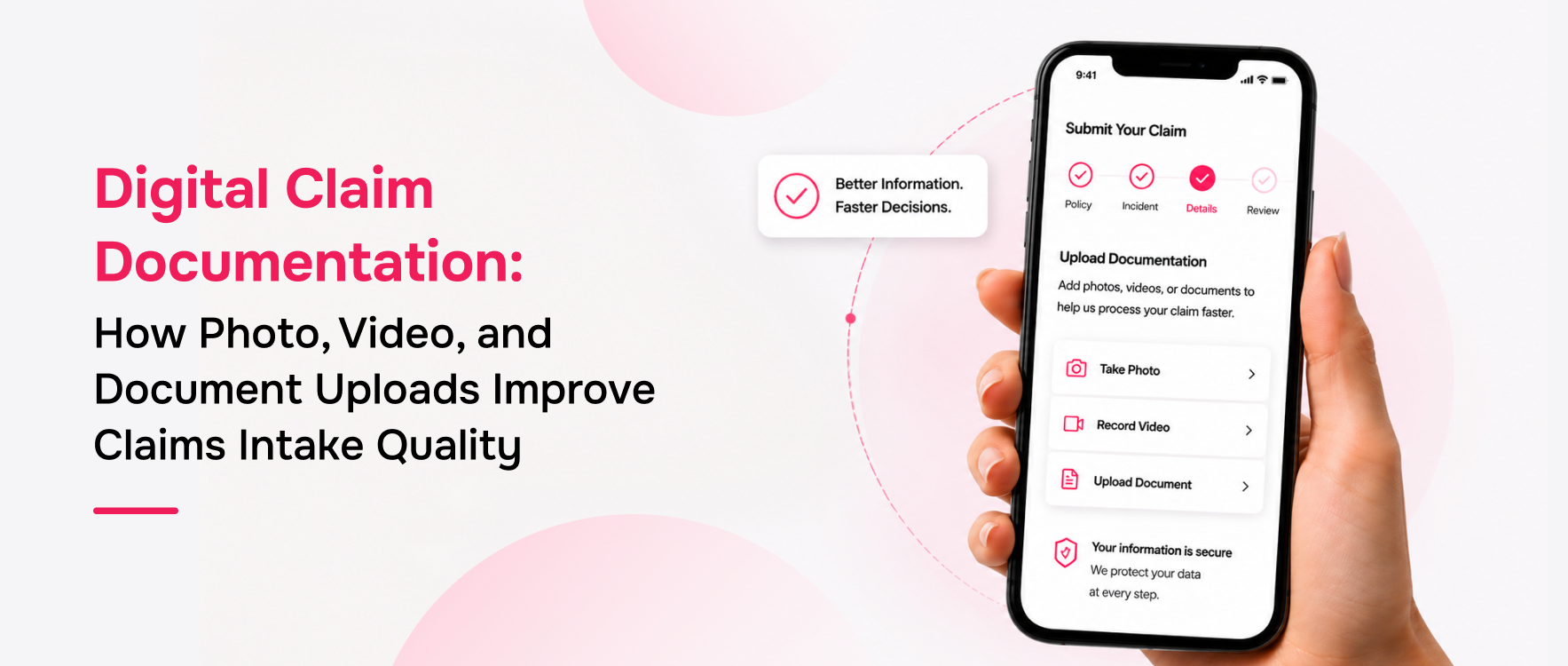
In many claim journeys, the first submission sets the tone for the rest of the experience. If the insurer receives incomplete photos, missing forms, or documents without context, adjusters must follow up. That adds time for the policyholder and work for the claims team. Guided photo, video, and document upload workflows can reduce that friction by telling customers what to provide, where to upload it, and what happens after submission.
Why documentation quality matters more than upload availability
An upload button is not the same as documentation quality. Policyholders may not know which angles matter, whether receipts are required, how to photograph damage, whether to include a police report, or how to label documents. They may upload the wrong file type, submit blurry images, or provide documents that are disconnected from the claim record.
Claims teams need information that is complete, relevant, and reviewable. A stronger digital workflow can guide the customer through required and optional documentation, explain examples in plain language, confirm successful submission, and provide the next step. That creates a better experience for honest policyholders and a cleaner intake process for internal teams.
What guided claim upload workflows should include
A practical digital claim documentation workflow should include claim-specific instructions, mobile-friendly photo capture, video upload where appropriate, document upload, file labeling, confirmation messages, and visibility into what has already been submitted. It should also make it clear when human review is required and when the customer should expect an update.
The workflow should be different for different claim types. Auto physical damage, property damage, injury-related claims, theft, and liability events do not require the same documentation. Even a simple branching experience can improve quality by asking targeted questions and requesting the right supporting materials based on loss type.
How better documentation reduces rework
Claims rework often happens when adjusters need to request the same information after intake. Better digital documentation can reduce this by collecting the right evidence earlier. That does not remove judgment from the claim process. It gives claims professionals cleaner information to review.
For policyholders, this matters because repeated documentation requests feel like delay. They may interpret follow-up questions as confusion, lack of progress, or poor service. A guided upload process can set expectations early and show that the insurer is moving the claim forward.
Where Xemplar Engage comes into play
Xemplar Engage can support this topic through digital service experiences that help policyholders interact with claims workflows from mobile and portal environments. Its app and insured portal positioning can be framed around making claims-related tasks easier for customers, including access to claim information, notifications, and digital interactions that reduce confusion.
The article should avoid overclaiming fraud detection or automated adjudication unless those capabilities are specifically verified. The safer and stronger positioning is that Xemplar Engage helps insurers and MGAs create structured, policyholder-friendly digital journeys that can improve intake completeness, document access, and service continuity.
How to measure claim documentation performance
Insurers should measure more than the number of files uploaded. Better benchmarks include percentage of claims with complete first submission, average number of follow-up documentation requests, average time from claim submission to review-ready file, percentage of mobile uploads completed successfully, abandoned upload rate, and repeat-contact rate after documentation requests.
These measures help claims and digital teams identify where guidance is weak. If customers abandon photo upload at a certain point, the interface may be too difficult. If adjusters keep requesting the same missing item, the intake checklist may need to be clearer. If customers upload documents but still call for confirmation, the workflow may need better status messages.
Common documentation gaps that digital workflows should reduce
Several claim documentation issues appear repeatedly in digital intake journeys. Photos may show damage but not enough context. Documents may be uploaded without labels. Receipts may be missing. Police reports or repair estimates may not be attached. Customers may submit screenshots instead of full documents. They may not understand whether video is helpful, optional, or required.
A guided digital workflow can reduce these issues by explaining what the claims team needs before the customer submits the file. The experience should use plain instructions, examples, progress cues, and confirmation messages. It should also let customers see what they already uploaded so they do not resend the same information or call to confirm receipt.
For insurers, these improvements can support better review readiness. For customers, they create confidence that the insurer has the right information and that the claim is moving forward. That is the core value of digital claim documentation: better evidence quality with less back-and-forth.
Implementation checklist for digital claim documentation
Claims teams can start by identifying the documentation items most often requested after initial intake. Those items should become the first candidates for guided upload prompts. If adjusters frequently ask for additional vehicle photos, the workflow should explain which angles are needed. If receipts are often missing, the workflow should ask for them earlier and clarify acceptable formats.
The upload experience should also provide confirmation and visibility. Policyholders should know whether files were received, whether more information is needed, and how the documentation will be reviewed. This reduces the urge to call simply to ask if the insurer has the file.
Internally, claims leaders should review upload completion, missing-document trends, and follow-up request volume. These metrics show whether digital documentation is improving intake quality or merely creating a new channel for incomplete files.
How this connects to customer communication after intake
Documentation quality should not end at upload. Policyholders need to know what the insurer received, what is still missing, and what the next review step will be. Clear post-upload communication reduces uncertainty and prevents customers from sending duplicate files or calling repeatedly for confirmation. It also gives claims teams a cleaner path to request additional information when needed. For Xemplar Engage, this reinforces the role of connected mobile, portal, notification, and service workflows around claim interactions.
FAQs
- What is digital claim documentation?
Digital claim documentation is the process of collecting photos, videos, forms, receipts, reports, and supporting claim evidence through digital channels. - Why do claim photo uploads matter?
Photo uploads can help claims teams review damage and context earlier, but they are most useful when the policyholder receives clear instructions on what to capture. - How can digital documentation reduce claims rework?
It can reduce rework by improving first-submission completeness and lowering the need for repeated follow-up requests. - Where does Xemplar Engage fit in digital claim documentation?
Xemplar Engage can support mobile, portal, notification, and claim-related digital journeys that make documentation and communication easier for policyholders.