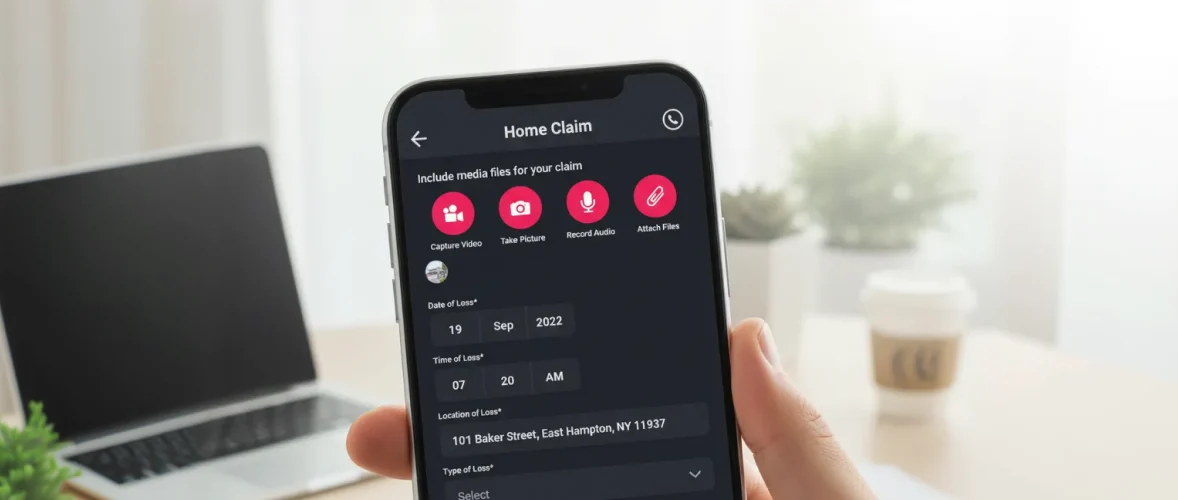
In claims, time is not neutral. Every minute between loss and first contact shapes how the customer remembers your brand, how they talk about you online, and whether they renew. Speed signals competence, empathy, and control. Delay does the opposite.
This blog is a practical guide for carriers and TPAs on the hidden brand cost of slow claims, and a blueprint for fixing it with disciplined workflows and modern engagement.
The reputation math of delays
A claim is the only moment most customers test their policy. If they feel ignored or uninformed, the story spreads to family, agents, social feeds, and sometimes regulators. The pattern is predictable:
- Uncertainty grows: No first contact, no status, no timeframes.
- Workload spikes: Repeat calls, duplicate emails, agent escalations.
- Sentiment turns: Social posts, 1-star reviews, complaint portals.
- Costs rise: Vendor standstill, storage days, attorney involvement.
- Churn follows: Non-renewal, broker friction, lost referrals. You can pay in minutes up front, or in months of brand repair later.
Five delay moments that damage trust
- First contact after FNOL
The “golden hour” sets tone. A human acknowledges the loss, sets clear next steps, and gives a name and a channel to reach. Silence here is the number one reputational risk. - Triage and vendor dispatch
Tow, remediation, glass, rental, emergency services. If the customer has to chase, they assume nothing is happening. - Estimate approval loop
Hidden waits between adjuster, estimator, and vendor approvals create “blackout days” that feel like neglect. - Payment timing
Partial approvals and unclear payment schedules feel like denial even when the coverage is valid. - Total loss and injury flows
These are emotionally charged. Delay reads as indifference, which travels fast online.
The simple scorecard that protects your brand
Track these weekly, by line of business and severity band. Small team, small data, big clarity.
- FNOL → First human contact: median minutes, 90th percentile.
- Status freshness: time since last proactive update per active claim.
- First-touch resolution rate: tasks closed at the first contact.
- Avoidable repeat contacts: same customer, same issue, 72-hour window.
- Escalations: social mentions requiring response, regulator complaints, attorney representation rate.
- Experience: post-interaction CSAT and claim-end NPS.
- Leakage flags: storage days, supplemental estimate frequency, rental overage.Keep the dashboard on one page. If a metric needs an appendix to explain, you do not need it yet.
Playbooks that prevent reputational drag
- Golden hour after FNOL
- Auto-acknowledge within minutes by the customer’s channel of choice.
- Assign a named contact and expected response time.
- Offer self-service links for photos, documents, appointment booking.
- Set the day’s plan in plain language.
- Daily status rhythm
- Proactively message “what we did today” and “what happens next.”
- Include any items blocking progress and how to unblock.
- For complex claims, add a weekly summary that a layperson can forward to family or an agent.
- Vendor orchestration
- Single workspace for tow, body shop, remediation, medical scheduling.
- Push real-time ETAs to the customer.
- Escalate automatically when SLAs drift.
- Total loss clarity
- Explain valuation method, title steps, and payout timing up front.
- Provide a one-pager the customer can reference, not a phone script.
- Injury sensitivity
- Use empathy templates and keep the customer from repeating their story.
- Offer a direct line for medical updates, not a general queue.
How Xemplar Engage removes time risk
Immediate, human-feeling contact
- Omnichannel intake and auto-acknowledge across app, web.
- Smart routing to the right handler with live presence and workload awareness.
- Named adjuster and office hours sent on the first message.
Proactive status and next-best action
- Event-driven updates at key milestones: assignment, estimate, approval, vendor dispatch, payment.
- Playbooks for auto, property, and injury lines with editable micro copy your compliance team can approve once and reuse.
Self-service that actually helps
- Guided photo capture, document upload, appointment scheduling, rental links, and repair selection in one place.
- Real-time vendor ETAs and two-way messaging so customers do not need to call.
Integration that keeps momentum
- Connectors for common core systems, claims platforms, and communications APIs.
- Identity and consent baked in so context follows the customer across channels.
Signals for reputation risk
- Queue health, stalled-claim alerts, sentiment from messages, and early warnings when complaints or attorney representation become more likely.
- One-page executive view that highlights cycle time, experience, and leakage outliers.
A 60-day blueprint that earns the mandate to scale
Weeks 0–2
- Pick one auto severity band and one property scenario.
- Define three metrics: FNOL → first contact, status freshness, CSAT.
- Load templates, set SLAs, and map handoffs with vendors.
Weeks 3–6
- Go live for a limited geography or distribution partner.
- Daily stand-ups to remove blockers.
- Publish a simple internal “today’s claims health” snapshot.
Weeks 7–8
- Executive readout: show minutes saved, repeat contacts avoided, and CSAT lift.
- Approve a second cohort and add one vendor orchestration flow.Keep scope tight, show movement in weeks, then expand.
What to change tomorrow
- Set a firm SLA for first human contact and monitor it hourly.
- Turn on proactive status messaging for every active claim.
- Give customers a single place to see everything: assigned handler, tasks, next steps, and ETA.
- Enable social listening for claims keywords to catch issues early.
- Train every handler on two empathy templates and one escalation protocol.
Bottomline
Claims speed is not just an efficiency goal. It is your public reputation in motion. You can compress minutes at the edges with scripts and effort, or you can redesign the middle with clear playbooks, real-time orchestration, and proactive communication. Xemplar Engage exists to make the second path simple, measurable, and fast to prove.